

Through the Mighty Waters
Grieving and Healing in Asian American Theological Formation

By Joshua E. Livingston, Managing Editor for Imagine Otherwise.
After about a month, I’m still reflecting on the Center for Asian American Christianity’s annual mental health conference, Our Flourishing, Our Faith. Aside from the novel ways that the event weaved together mental and emotional wellbeing with Asian American experiences and Christian theology, I’m struck by the ways that mental health itself fits within a larger theological formation that speaks to the uniqueness of the Asian American experiences of transpacific migration and racialization.
Each year, the CAAC runs a cycle of conferences that methodically reveal a curricular framework for the theological formation of Asian American Christians. Center Director, Dr. David Chao, calls it “the three concentric circles” of formation, and this is mirrored in the annual cycle of conferences: the pains and pressure points of family and ecclesial life are always examined within the particularly placed social histories of Asian Americans which, despite the traumatic events that typically surround such migrations, are framed within the hope of Christ as narrated in Holy Scripture.
This curricular framework is addressed annually through the Our Flourishing, Our Faith mental health conference, the Our Stories, Our Faith social history in place conference, and the Biblical Theology in Asian America conference. These are not designed to be standalone events, but rather function as a trinitarian structure by which Asian American identity in Christ is constructed and tested.
“[T]he three concentric circles” of formation: the pains and pressure points of family and ecclesial life are always examined within the particularly placed social histories of Asian Americans which, despite the traumatic events that typically surround such migrations, are framed within the hope of Christ as narrated in Holy Scripture.
Last month, this trinitarian structure was beautifully encapsulated in the plenary session given by Sangeetha S. Thomas, a Licensed Professional Counselor and the owner of Nepsis Counseling in Dallas, Texas. Sangeetha’s talk was called “Unresolved Grief, Trauma, and the Journey Toward Healing,” and whether she was aware of it or not, perfectly unpacked the ways that the CAAC attempts to clarify Asian American theological formation.
Sangeetha began her talk acknowledging the ground on which she stood by recounting both the hopeful and heavy historical counternarratives of Asian Americans’ migration to the West Coast. These include the Third World Liberation Front student strike for the creation of ethnic studies as an academic discipline and the first national conference on Asian American mental health that was held in San Francisco, as well as the Filipino, Indian, and Chinese people who were taken as slaves, suffering inhumane labor conditions and the pre-1965 immigrants who came through Angel Island as railroad workers and farm laborers without civil rights. Perhaps anticipating the potential backlash for a trauma therapist doing public scholarship through the lens of history, she reminded the audience that unresolved ruptures are only healed through direct engagement with such historical realities.
In order to heal from grief, you must only grieve; and this entails staring history straight in the face. It’s about this time that it’s always helpful to recall Gary Okihiro’s dictum, paraphrased “Asians did not go to America; Americans went to Asia.” In other words, the story is not simply that Asians came to America in search of a better life. Rather, the imperialistic agendas of America knew no bounds, and eventually retrieved for themselves the resources of Asia. So right away we can see how the pains and pressure points of Asian American life are littered by what could only be described as traumatic.
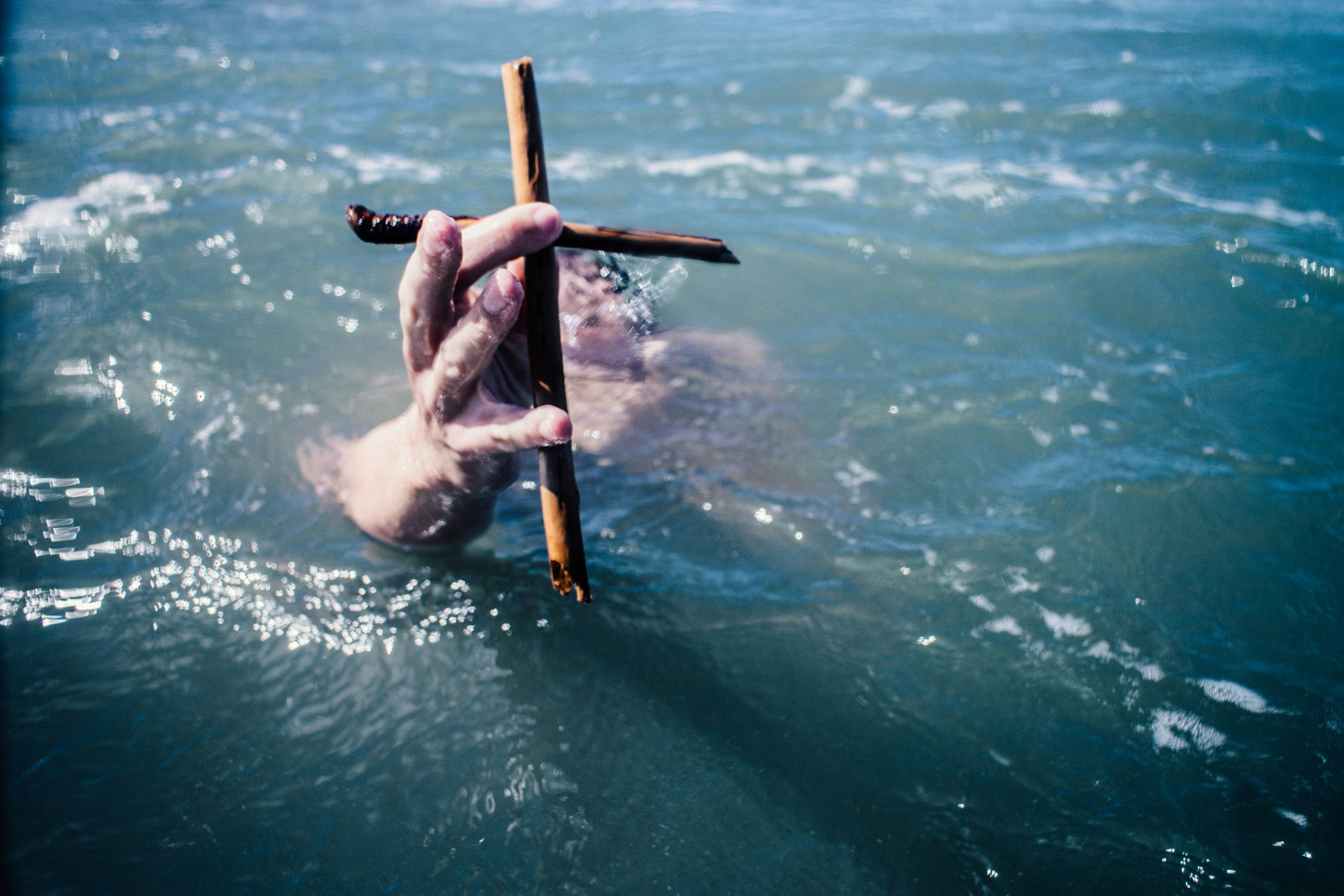
And here is where Sangeetha reaches deeper into the theological depths. More than a convenient metaphor for transoceanic migration, the psalmist is cited: “Your way was through the sea, your path through the mighty waters” (Psalm 77:19), while adding, “When you pass through the waters, I will be with you” (Isaiah 43:2). In other words, a theological treatment of grief mirrors the life of the cruciform Christ.
In order to heal from grief, you must only grieve.
Profoundly shaped by a lifetime of Indian Orthodoxy, Sangeetha deals us a theology concerned with communion; communion with God, with one another, and with all of creation. And yet we can see and feel the ways that this communion is ruptured through loss. The specific forms of loss addressed included death (loss of life), relational cut-off (loss of togetherness), and erasure (loss of heritage), all of which are marks of Asian American experience in a variety of degrees. These include family estrangement, refugee and migration losses, racialization losses, and adoption.
So if grieving itself is the pathway to healing from grief, it becomes necessary to understand how the body processes experiences of loss, or its natural abilities to respond to unnatural circumstances. As we now all know so well, “Distress in the mind and body demands to be expressed, witnessed, and brought into relationship” in order to be healed. This is all the more tragic when the loss is a loss of peoplehood–a form of “migratory grief.”
Unprocessed grief and trauma, when not dealt with or worked out through learned behaviors that are maladaptive, can be passed on like a generational curse. So what stands in the way of Asian Americans, or anyone for that matter, engaging in healthy grieving practices? In a world that prizes winners, it is precisely our inability to process loss. Here, Sangeetha helped show how grief unlocks joy through an integrative approach, by characterizing loss not as opposed to life, but built into it. Or, to phrase it theologically, “to live is Christ, and to die is gain” (Phil. 1:21).
Christ hung from a weeping tree. The very wood that was hewn into a cross laments the loss. And yet this very act transforms how we grieve. If “distress in the mind and body demands to be expressed, witnessed, and brought into relationship,” this is nowhere more illuminated than in the distressed body on the cross, the cup of which even Christ could not pass. The healing of all creation comes in the same manner as yours and mine: through direct confrontation with death itself. Beautifully embodied in the Orthodox tradition as “the suspension of peace”—a disruption, a day everything turns black—we are witness to a spiritual formation in the midst of silence and self-emptying. “Your way was through the sea, your path through the mighty waters,” but “When you pass through the waters, I will be with you.”
This is the gospel promise of healing and wholeness that frames the mission of the CAAC. “For he himself is our peace, who … has destroyed the barrier, the dividing wall of hostility” (Eph. 2:14), whom we mirror as we face our loss. In this context, mental health is not simply about becoming our best selves, but rather it is a profound act of faithfulness, refusing to ignore the pains and pressures of intergenerational family life as they are disrupted by traumatic patterns of migration and racialization. Grief unlocks joy as we look to Jesus, “the pioneer and perfecter of faith, who for the sake of the joy that was set before him endured the cross, disregarding its shame, and has taken his seat at the right hand of the throne of God.”

Joshua E. Livingston (Luna Kim Yeh) is the Managing Editor for Imagine Otherwise at Princeton Theological Seminary's Center for Asian American Christianity. He also serves as the Director of Congregational Engagement at Englewood Community Development Corporation.
I like how this piece shares a meaningful reflection, it feels calm and thoughtful while reading through it. https://www.djoinerbooks.com/